Have you heard that the US Coast Guard (USCG) is retiring pyrotechnic flares from their vessels and switching to electronic visual distress signal devices (eVDSDs)? The change was effective April 1 for small boats and June 1 for cutters.
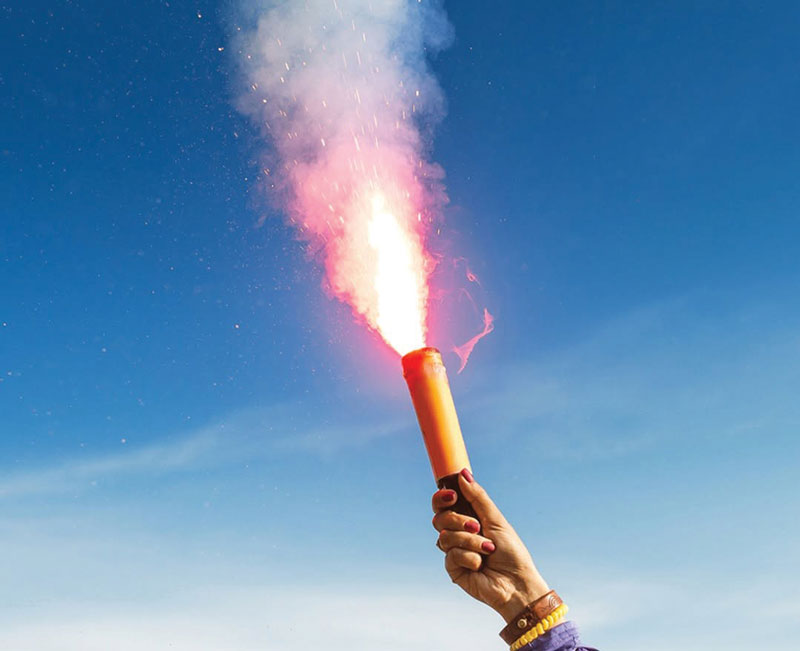
What does that imply for the recreational boater? First, the effectiveness of electronic signaling devices has improved significantly since they first received USCG approval. It also means that you won’t have to worry about the 42-month lifetime of pyrotechnic devices and how to dispose of outdated devices, which are considered hazardous material. Instead, you’ll need to keep track of battery age and condition. It’s a good idea to write the date on batteries and replace them every year or two.
The technology of electronic signaling devices has really advanced in the past few years. The LEDs in the night signals are now so powerful that you should shield your eyes from the flashes. They are also very energy efficient, with run-times often measured in hours. Compare that with the pyrotechnic duration that is measured in seconds.
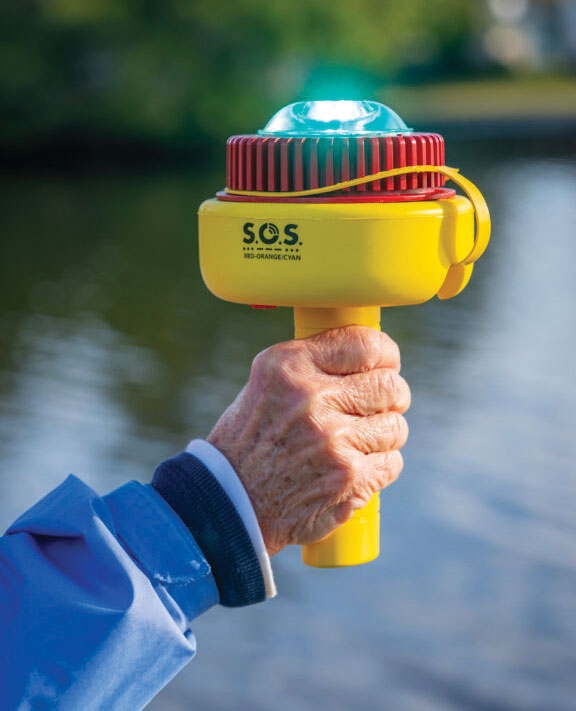
There is a downside to the electronic signals. They are only valid for night use, and you must carry an orange signal flag for daytime location signaling. For this reason, I prefer to still carry both types of signaling devices. The electronic devices and signal flag suffice for USCG requirements, while the pyrotechnics provide additional signaling capabilities:
- Smoke—great for daytime location signaling.
- Handheld flares—great for night-time location signaling and alert signaling.
- Meteor flares—useful for medium-range alerting, both daytime and nighttime.
- Parachute flares—like meteor flares, but long-range alerting due to greater heights and longer burn times.
Our experience with flare shoots indicates that many pyrotechnics are viable years after their expiration, but that they may not be as bright or burn as long as newer devices.
One down-side to hand-held pyrotechnic flares (smoke and red signal) is that they can drop hot slag, so you will need to hold them over the water, especially when you’re on an inflatable boat or life raft. Since you’ll be at the edge of the boat, be careful that you don’t lose your balance when waves are making your boat a moving platform
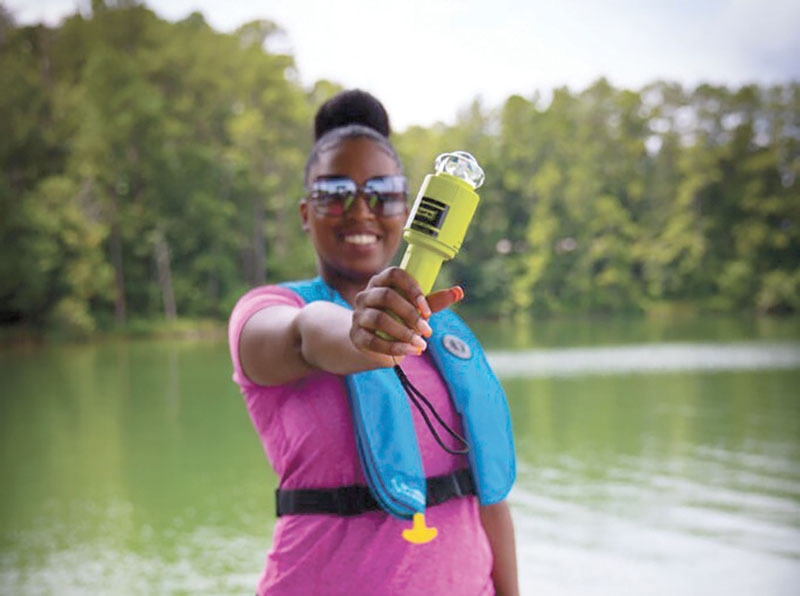
Ultimately, you’ll want to choose the signaling device that works in the situation you’re facing. The key factors are whether you need to issue an alert signal or provide location signaling as well as the signaling distance.
While I’m on the subject of signaling devices, don’t forget the signaling mirror, which is great for daytime use. It works when wet, is easy to use, doesn’t require batteries, has a long range (line of sight can be quite far to a search aircraft), and performs both alerting and location signaling. Hold the mirror at your eye, hold your other hand up and form a “V” with your fingers bracketing the target (a vessel or aircraft), and tilt the mirror to reflect the sun onto your “V.’” Sweep the sun’s reflection back and forth across your finger “V”. The repeated flash will be impossible for rescuers to miss. Note that some angles between the sun and the rescuers may require strange postures. A concise explanation with examples of ad-hoc mirrors can be found here: grimworkshop.com/blogs/news/how-to-use-a-signal-mirror.
Further Reading: powerboat.news/your-boat-flares-are-expiring-here-is-the-alternative.
About the Author: Terry Slattery, an electrical engineer, started sailing in college; a progression of boats followed. This is one of his monthly safety articles from the Annapolis Sail & Power Squadron’s newsletter, available at aspsmd.org.