Teak is widely known as a premier wood for the marine industry, so when asked to do a piece on teak maintenance, the hardest part was distilling the article down to a digestible size while still getting enough useful information across. In my mind, there are two categories when discussing teak care: 1) products, and 2) practices/techniques. For this article, we will focus on products.
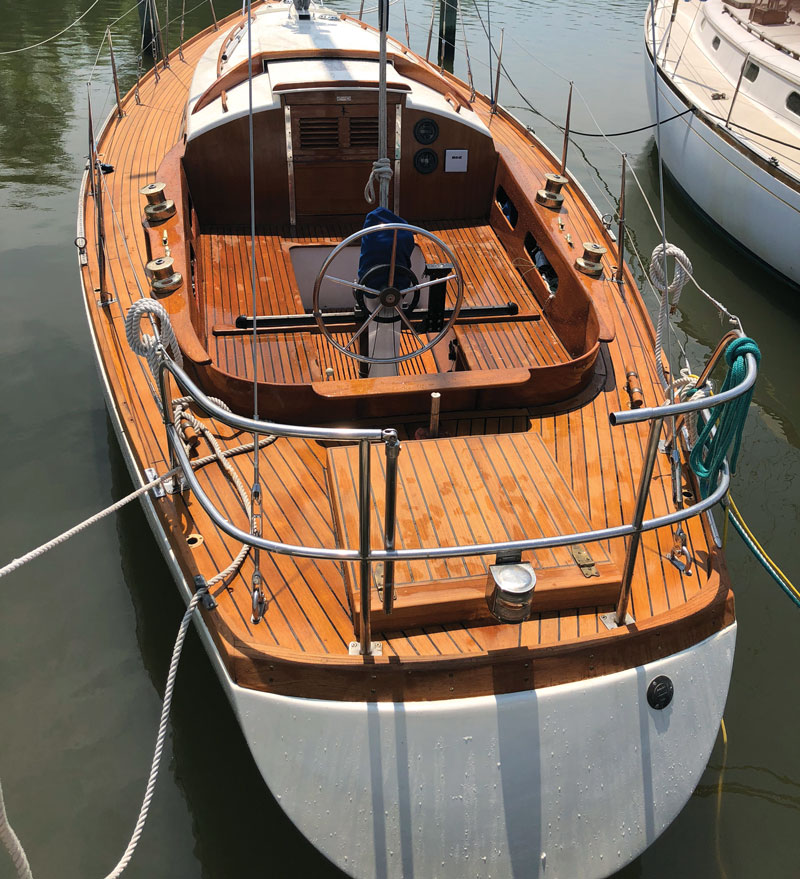
The Chesapeake climate—hot summers, high humidity, salt spray, and winter freeze-thaw cycles—demands finish choices that balance multiple requirements. These include appearance preference, slip resistance, downtime, cost, resilience, ease of application, and frequency of application. My goal here is to identify options along with pros and cons.
Why teak to begin with? Teak’s natural oils and tight grain resist water, decay, insect infestation, and degradation from the harsh marine environment. The wood ages slowly, moving from golden-brown when fresh to a silvery gray patina if left untreated. The wood is amazingly resilient. Trees have been found on the forest floors of Burma after having laid there for decades, showing little deterioration. To many, the traditional look of treated teak on a boat enhances its overall appearance, bringing a natural, warm beauty to the vessel that can’t be reproduced easily in any other way. On the other hand, teak can be left untreated indefinitely and it will do just fine.
Teak’s performance comes from a few core properties. First, it’s relatively dense for a tropical hardwood, which contributes to durability under foot traffic and resistance to impact. Second, the heartwood contains a high level of natural oils and extractives, such as rubber and silica, that repel water and deter rot without the need for frequent replacement. Its density and oils also provide excellent dimensional stability, meaning it swells and shrinks less as moisture and temperature change. Workability is generally good; the oils can slow cutting and dull blades, so sharp (preferably carbide) tools and regular maintenance of equipment help. The same oils that resist water can interfere with the application of film-forming finishes, so surface prep and priming become important for any finish application, including varnish and sealers. Teak bleaches to a silvery patina when exposed to UV light unless protected, and the grain can be highlighted or muted depending on the finish you choose.
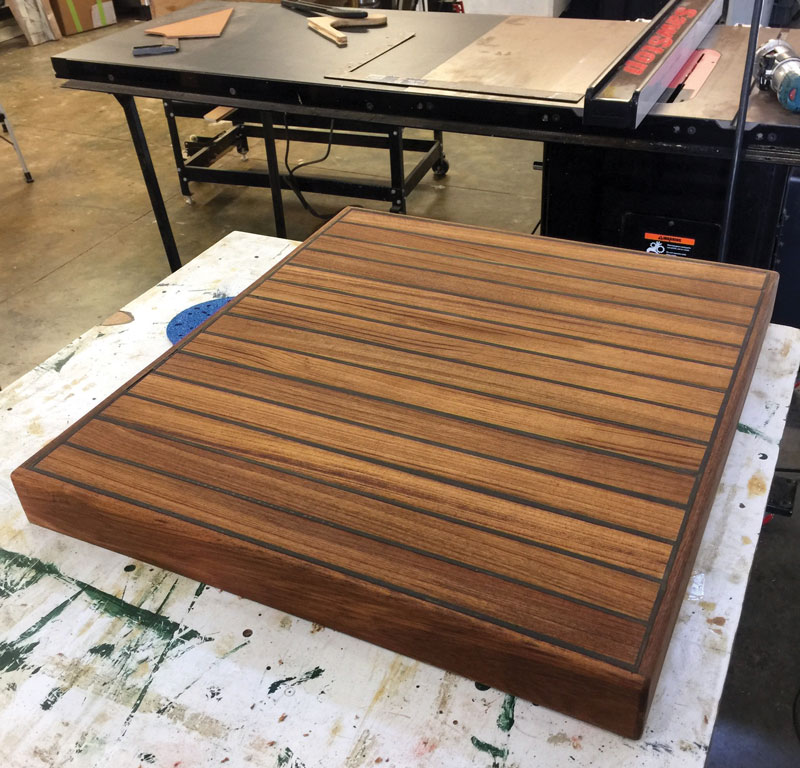
Options:
Here are some of the most widely available products on the market for caring for your teak. This is by no means an exhaustive list and there is no implied product preference:
Option A — No finish (natural weathered patina).
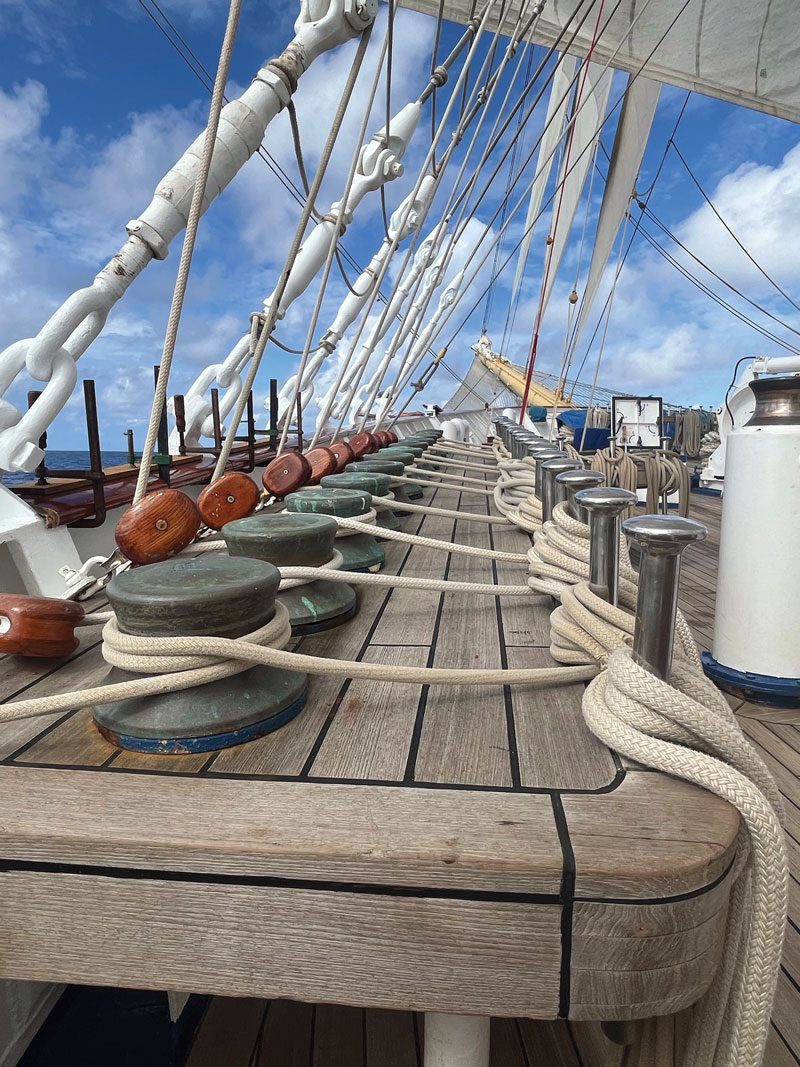
This approach lets teak gray gracefully. The upside is minimal maintenance and cost, plus an authentic look. The downsides are a progressing gray that requires cleaning to control salt and mildew in humid summers. It’s well suited for those who prefer low-upkeep expectations.
Option B — Teak oil / penetrating oil.
This penetrates to darken and nourish without forming a hard film. It preserves a rich color and grain, and touch-ups are straightforward. The trade-off is the need for regular re-application, often every few weeks to months. It works well on decks where aesthetics matter and for interior teak trim. Oil application can be done easily by the owner. Another trade-off is that depending on the type of oil, darkening of the finish can occur over years of over-coating, leaving a very dark surface that can get too hot to walk on with bare feet under summer sun.
Option C — Penetrating sealer.
A non-film sealant with UV blockers keeps the natural feel while adding moisture resistance without gloss. It typically requires less maintenance than varnish but isn’t as protective against abrasion as film coatings. Best on high-traffic exterior teak where you want moisture protection without a film. This is another easy-to-apply product that can be completed by the owner. Many sealers come with pigments that will affect the wood color. It is important to test before applying to your boat. After multiple years of application, depending on the product, the deck can look almost like it was painted, requiring removal to recover the grain of the wood.
Option D — Film-forming varnish/polyurethane.
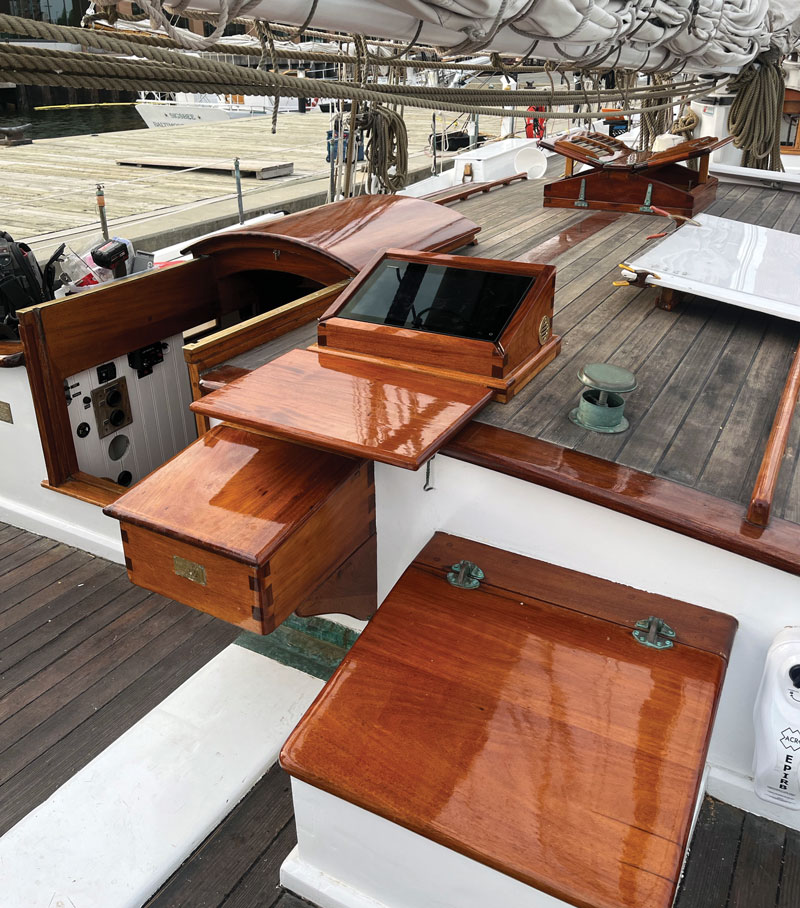
A hard protective film provides excellent abrasion and UV resistance and yields a uniform, classic look. Downsides include the need for careful sanding between coats, longer cure times, and potential peeling if prep or moisture control is poor. Ideal for high-use areas with embedded non-slip in the final coat, or on non-traffic areas such as coamings, toe rails, and eyebrows. Non-slip additives typically belong to zones that see transitional foot traffic, such as stairs and companionways. Non-skids are normally not applied to general deck areas but often are applied to below-deck soleboards and companionway ladders. This finish requires significantly more time to apply and requires technical skill and experience.
Option E — Two-part, UV-stable polyurethane topcoats.
A two-part resin system provides durable, UV-stable protection for demanding onboard environments. These coatings require controlled surface prep and proper application windows but deliver strong color, gloss, and sun resistance with just two coats when used as directed. Two-part products typically require personal protective equipment as the off-gassing can be toxic and carcinogenic. It also requires technical skill and experience to apply.
Pro tips: Think in zones when choosing a system; a hybrid approach often yields the best balance. Many products come with color and hue variations. Always test a small hidden patch first or get a scrap teak board to test on.
Typical products used in our region:
- Cleaning and prep: Star brite Teak Cleaners, TotalBoat Teak Cleaner.
- Oils and penetrating finishes: Star brite Teak Oil, Epifanes Teak Oil, TotalBoat Teak Oil, Semco Teak Oil.
- Penetrating sealers: Star brite Teak Sealer, TotalBoat Sealer, Semco Teak Sealer.
- Varnishes: Epifanes Clear Varnish, Interlux Yacht Varnish, TotalBoat Marine Spar Varnish.
- Varnish-like but easy to apply: Sikkens Cetol.
- Two-part topcoats: Interlux Perfection, TotalBoat Two-Part Polyurethane, Awlgrip 2K, Epifanes 2K Polyurethane.
Stay tuned for part 2, which will cover best practices/techniques for teak care, in the July issue of PropTalk.
About the Author: Rick Truett is a 35-plus year veteran of the marine industry. He maintains ABYC Master Certified Technician status among other certifications. Rick runs Truett Marine Services, a full service mobile marine company operating in the Baltimore/Annapolis area and is the lead vessel systems instructor for Annapolis School of Seamanship and can be reached at [email protected].