Visiting Washington, DC, is a rite of passage for so many school children. In the “school visit season,” usually the late spring when young minds start to wander anyway, you can’t throw a stone without hitting a yellow school bus (for the record, your authors are not advocating throwing stones at yellow school buses).
Likewise, the seat of the federal government and the monuments and parks beckon many an adult visit. So, it is likely that as a school kid or adult you have toured the nation’s capital. But have you done it by boat?
This PropTalk series, “See the Bay,” is designed to encourage you to visit the subject location, not by bus, car, train, or plane, but by boat. Visiting Washington by boat, unless you live along the Potomac, includes covering 100 nautical miles of beautiful winding river from the Bay to downtown DC.
Cruising up the Potomac
In June, a contingent of Annapolis Yacht Club members made that trip. While DC is only about 34 statute miles from Annapolis by land, it is 151 nautical miles by boat. A stop at Solomons made for a good run down the Bay before entering the Potomac. For those of you headed to Washington from elsewhere on the Bay, a similar stop before entering the river may make sense.
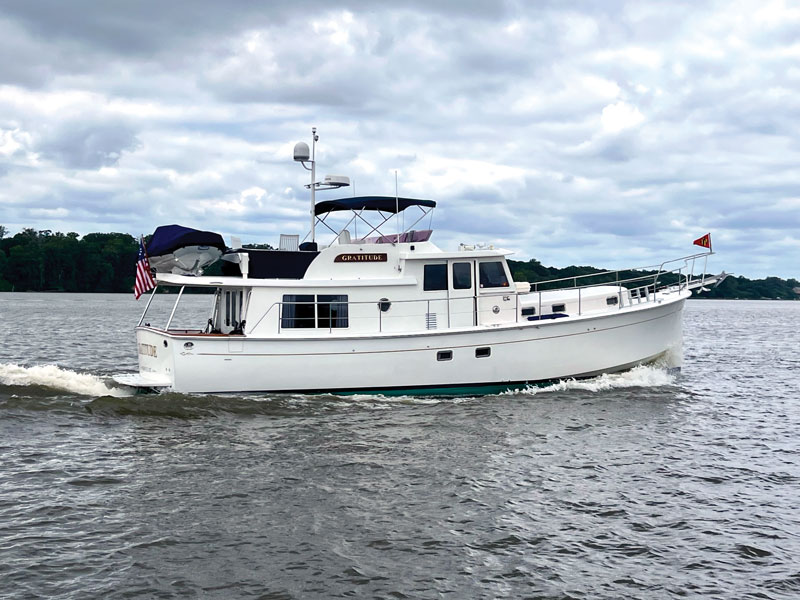
With 100 nautical miles of river to cover you may be looking for a stop along the way. The AYC fleet stopped and spent a night in Colonial Beach, VA, a funky beach town known as the “playground on the Potomac.” Despite this description, it is also a rich history as the birthplace of Presidents George Washington and James Monroe as well as the summer retreat of Alexander Graham Bell.
While planning the cruise we chose the Colonial Beach Yacht Center for our “on the way up” stop. Our arrival at the marina was a bit chaotic. The marina had changed hands just days before our visit. It is now known as Stringer’s Marina and Yacht Center. The management change and 15 boats arriving nearly at once was a challenge. The dock hands and the cruisers pitched in to dock and move boats to make sure there was enough room. We used every linear foot of floating dock space and more! The great team effort was rewarded with a fun dinner at the tiki bar with a great local band.
The next day, the group headed up to DC. Some of the fleet took the opportunity to stop enroute at Mount Vernon, the historic home of America’s first president, George Washington. The dockmaster there, alerted to our interest, was kind enough to open the dock on a day that is normally closed. Mount Vernon is beautifully maintained and gives visitors a glimpse back in time to how our first president lived and worked.
The cruise up the Potomac has a beautiful rural nature, with woods and wetlands extending almost to the city. Once you spot National Harbor and pass under the Woodrow Wilson Bridge, the river undergoes a quick transformation into an urban setting.
The DC Waterfront and Alexandria
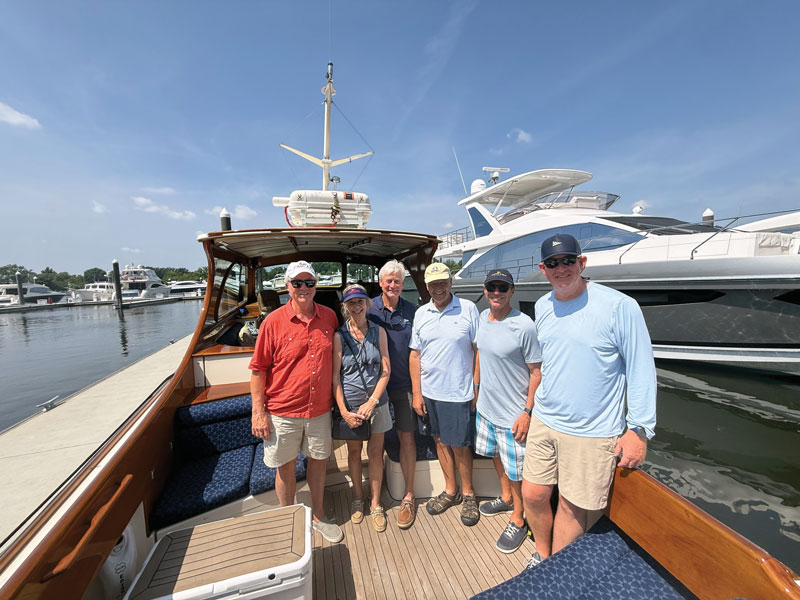
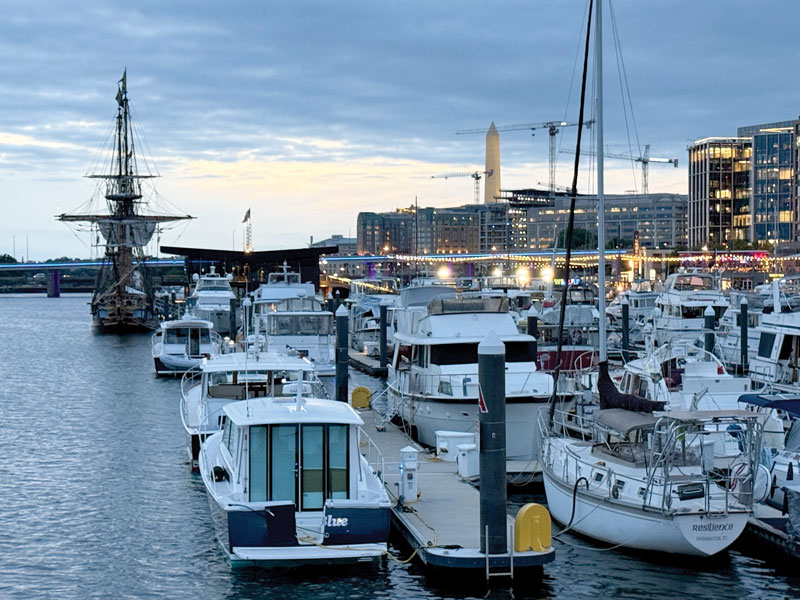
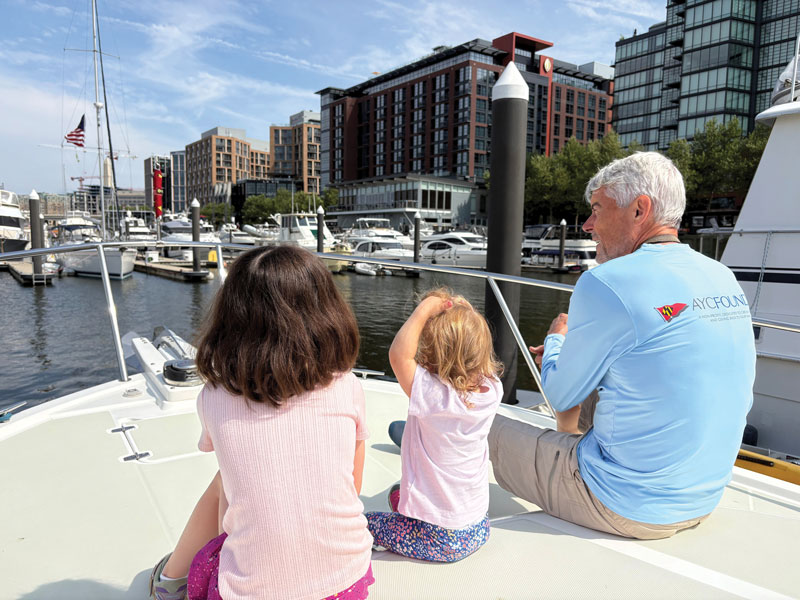
The Washington, DC, waterfront has undergone a remarkable transformation into a vibrant urban hotspot with a mix of restaurants, shops, apartments, and entertainment venues right outside your door. There is plenty of room for visiting boats. Most of the fleet of 15 boats stayed at the Capital Yacht Club, with some overflow at the adjacent Wharf Marina. The Capital Yacht Club takes transient slip requests and has a great facility. The Wharf Marina is also a first-class facility. Both are also within walking distance of the various Smithsonian museums, the Capitol, and the White House.
Your authors are not going to even begin to try to articulate the plethora of sights to see in DC. The choices represent a dizzying array of museums, monuments, and federal buildings that comprise the seat of government. There is quite literally a year’s worth of “stuff” to see, and you have no doubt seen a few of them already. Read on and we will tell you a little about the places we chose.
Our first full day in DC was focused down the river in Old Town Alexandria; another worthy stop just north of the Wilson Bridge. We took the water taxi from DC to explore and shop in this historic area and later enjoyed an excellent group dinner at an Alexandria favorite, the Landini Brothers Wine Room.
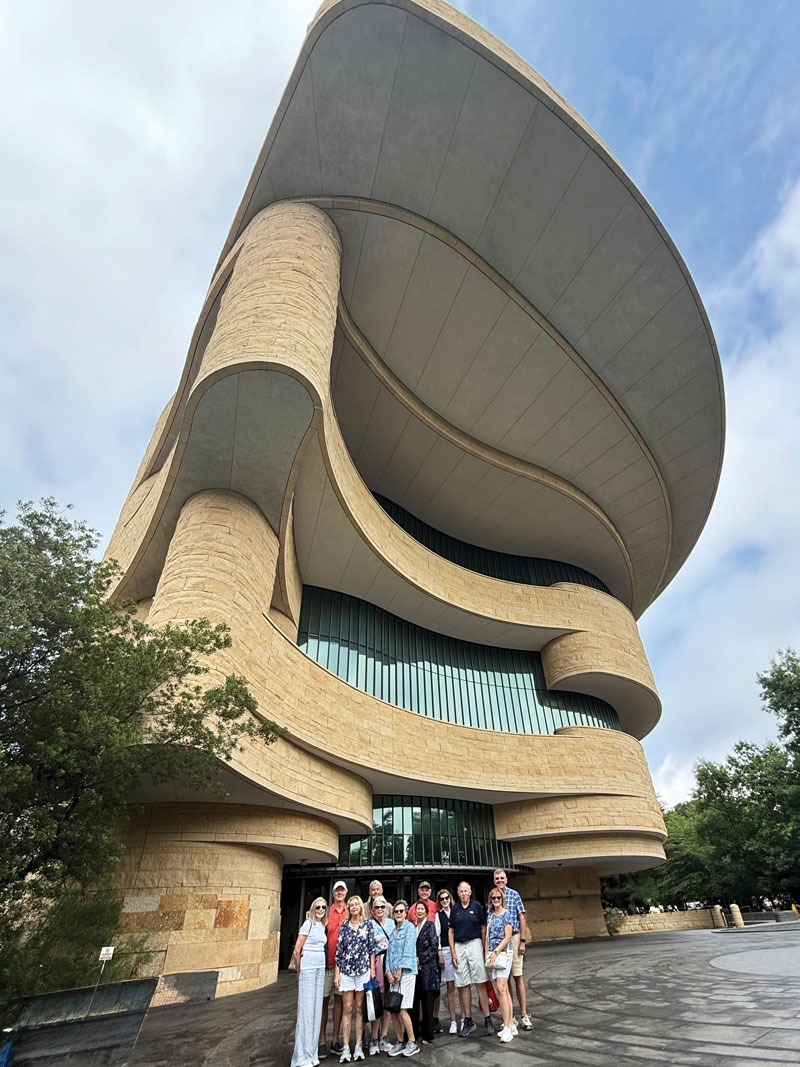
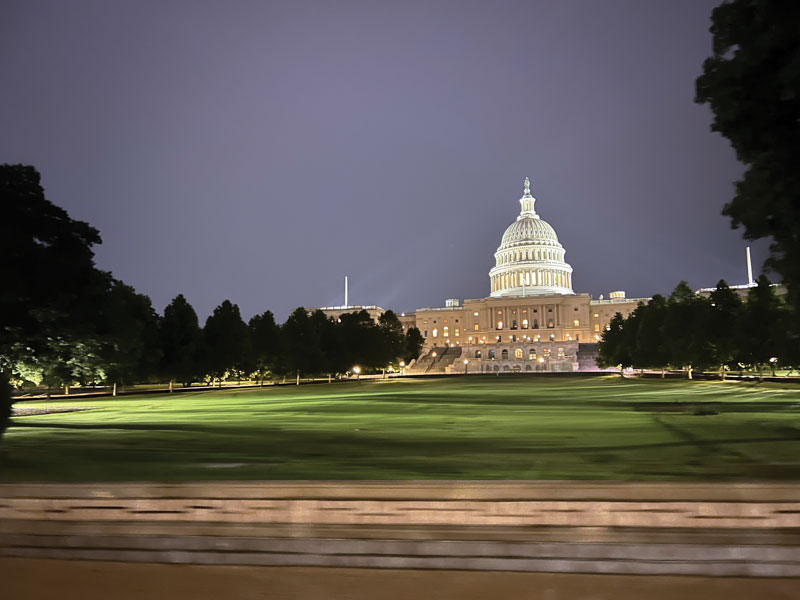
The following day offered us a little rain. The precipitation did not keep us from a tour of the U.S. Capitol and the Library of Congress before heading to the National Museum of the American Indian. The tour of the Capitol is docent-led and opens with an informative video on the history of the building and our nation. All our stops were fascinating opportunities to learn more about our history—both the good and bad.
We should note here that the cafeteria in the National Museum of the American Indian is a culinary delight. The Mitsitam Native Foods Cafe is unlike so many cafeterias you have undoubtedly visited. Mitsitam means “let’s eat” in the Native language of the Delaware and Piscataway peoples. Executive chef, Alesandra “Alex” Strong has created a menu that represents a variety of native-inspired food that will beg you to come back for dinner (but they are only open until 4 p.m.).
The following evening was dedicated to a Monuments by Moonlight tour. This is a trolly tour with narration by a knowledgeable driver/docent. Although a ferocious storm prevented us from taking advantage of many of the opportunities to get on and off to explore, we did get to walk around the Roosevelt Monument. The memorial is along the tidal basin with four sections covering each of Franklin Delano Roosevelt’s four terms as our president. It is a truly moving time capsule of how we came through depression and war to build a better world by working together.
Dockside conversations included sharing long past memories about the history we visited as many of us lived in or near and worked in DC for many years. As tourists arriving by boat, the redevelopment of The Wharf district, along with the impressions left after some of the tours, provided a new perspective and a greater appreciation for the city and our country.
Cruising South
After four great lay days in DC where we just barely scratched the surface of things to see and do, it was time to move on. And so, we somewhat reluctantly left the picturesque urban setting of The Wharf, gliding by monuments and historic buildings on our way south. Just as on the way into DC, the view rapidly transformed to countryside south of the Wilson Bridge.
Our planned stop on the way down the Potomac was Leonardtown. There the group divided between the newly renovated free dock and anchoring in the harbor. That evening we were treated to another culinary delight, a fabulous dinner at Sweetbay, where we were joined by owners Joe and Susan Dyer. The cuisine was excellent and equal to the venues recently visited in DC and Alexandria!
The following morning, the fleet headed to the mouth of the Potomac and then southward to Indian Creek Yacht and Country Club, followed by a stop at the Tides Inn in Irvington, VA. We caught a couple of leisurely days at both.
Still, the memory of the days in DC lingered and were the topic of dockside conversations. As good as the rest of the two-week cruise was, the days in Washington stood out. The opportunity to visit the nation’s capital by boat is closer than you think and so worth the trek.
By Mike Pitchford, Tom Clinch, and Steve Sharkey