As we cruise into full-on summer, if you haven’t yet determined all your weekend Bay destinations, we offer the following tried-and-true suggestions for determining which way to point your bow.
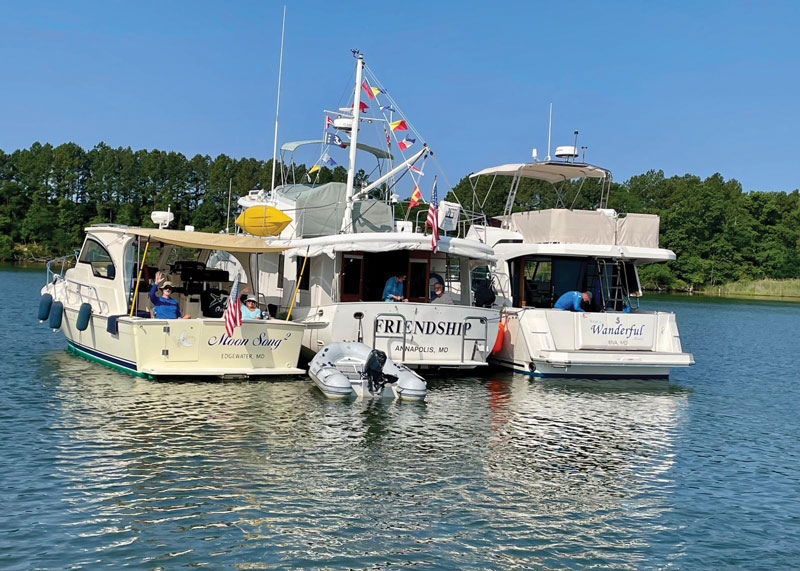
Make this the summer that you explore more of the Bay. Try a new-to-you anchorage or explore a waterfront town that you’ve not yet visited. Mix up nights on the hook and at marina slips. To get the full experience, plan to stay onboard some days so that you don’t miss watching the sunrise with a cup of coffee in the cockpit, afternoons spent floating in the brackish water, and dinner grilled onboard. However, it’s also likely that you will want get off the boat at some point. This will be your chance to stroll to a local bakery for breakfast, jump into a marina pool on a hot afternoon, and enjoy dinner in a cool restaurant, hopefully with live music, too. With planning, you can do all of this in one weekend!
Since variety is the spice of life, another suggestion is to mix up urban and rural destinations. It’s fun to spend the day or a whole weekend in a quaint waterfront town walking or riding bikes to the local hangouts, but it’s also great to dock in a city marina where you can call an Uber and zip to a concert, baseball game, museum, restaurant, or other metropolitan offering.
While sailors often leave their cruise itineraries somewhat flexible to take advantage of the prevailing winds, powerboaters can be more exacting with their plans. With this in mind, one strategy is to plan Southern Bay cruises early in the season and save the northern destinations for August. Why? Sea nettles. Throughout the summer they migrate north, so with some planning, you may just be able to avoid them (and their stinging tentacles!) altogether.
Raftup 101:
Six tips if your cruise plans include a raftup.
- The heaviest boat will be the anchor boat. The anchor boat captain is the final authority on how many boats he or she can accept.
- Swing radius increases when rafting, so before setting the host boat, make sure you have enough distance from other boats and objects. A 10 to one scope ratio is a good rule of thumb for a raft.
- When building the raft, the approaching boat should be ready to supply the fenders and the lines to tie up, and the host captain or crew should be standing by prepared to take the rafting boat’s lines, beginning with the forward spring line. The best practice is to have bow line, stern line, and two spring lines.
- If a summer thunderstorm might pop up overnight, break up your raft and anchor individually.
- A cleat hitch can be quickly released if you need to de-raft in a hurry. Never use the loop end of a line on a cleat.
- When walking over boats, it is considered impolite to go through the cockpit unless invited to do so. Instead, walk over the boat bow to get to the next vessel.
Join the PropTalk See the Bay Challenge and earn points for waterfront restaurants and other Chesapeake Bay attractions, such as maritime museums and lighthouses, you visit this summer! Log 25 points and get a T-shirt. Log the most points and you’ll win some great prizes!