The Chesapeake Bay Blue Crab Winter Dredge Survey, a cooperative effort between the Maryland Department of Natural Resources (DNR) and the Virginia Institute of Marine Science, estimates a total of 349 million blue crabs in the Chesapeake Bay in 2026, a 46-percent increase over the estimate of 238 million crabs last year.
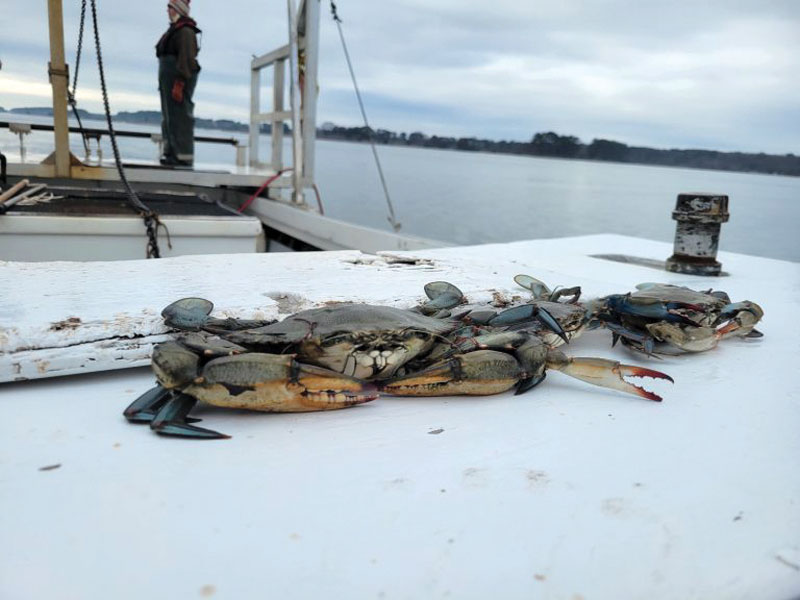
The survey also estimated 228 million juvenile blue crabs, an increase of 121 percent from last year. This above-average abundance is a promising result for fisheries biologists, after what had previously been six consecutive years of below-average juvenile recruitment. The total abundance and juvenile abundance were at the highest levels since 2019.
The number of adult male crabs also increased. There are an estimated 37 million adult male blue crabs in the Bay, which is 43 percent higher than last year.
However, adult female abundance has decreased by 25 percent, to 81 million crabs, which is above the management threshold but below the target level. In fisheries management, target numbers represent the desired state of a fishery, while thresholds are lower numbers that can trigger a management response.
“It’s very encouraging to see higher levels of blue crabs and juveniles, especially after a few years of lower juvenile recruitment,” Mandy Bromilow, DNR’s blue crab program manager, said. “However, we’ll still have to remain vigilant about the population, given that we have seen declines since 2011.”
The Winter Dredge Survey has been conducted cooperatively by Maryland and Virginia since 1990, and the results are reviewed annually in an effort to have consistent management efforts across the jurisdictions. Throughout the survey, biologists use dredge equipment to capture, measure, record and release blue crabs at 1500 sites throughout the Chesapeake Bay from December through March. Detailed results are available at dnr.maryland.gov.