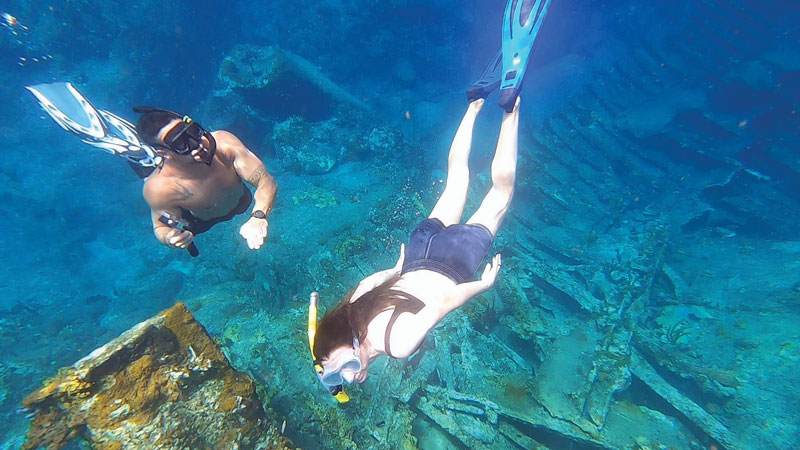
Bubbles sizzle in the water all around me as I leap from the stern of Kamalani. As I make my way over towards the doomed rocks of Black Rock Point, the remnants of the RMS Rhone begin to slowly appear out of the shadowy depths. She sank in this very spot during a hurricane in 1867, and more than 100 souls, including her captain, perished that night. Today, despite its tragic history, the legendary wreck off Salt Island is teeming with new life. (If you missed part one in this charter series, catch up at Circumnavigating the BVI: Part 1.)
Shipwrecks and Deserted Shores
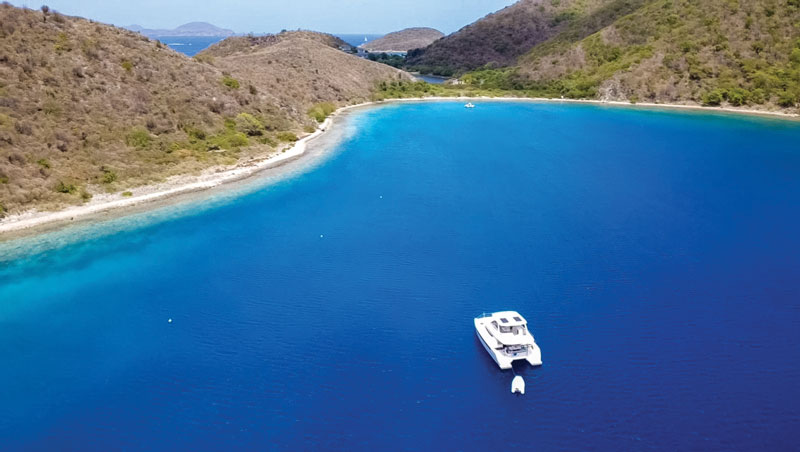
During my previous visit to the British Virgin Islands (BVI), my brother tried to convince us to stop at Salt Island, but “historic salt ponds” and a shipwreck we “may or may not be able to see” didn’t sound as appealing as the Cooper Island Microbrewery. So, he was outvoted. And honestly? I can admit when I’m wrong. I know many people love Cooper Island, but for me personally it was a “skip” this time around. I decided to listen to Tyler, and we grabbed a national park mooring in South Bay. This place easily became one of my favorite stops of the entire trip.
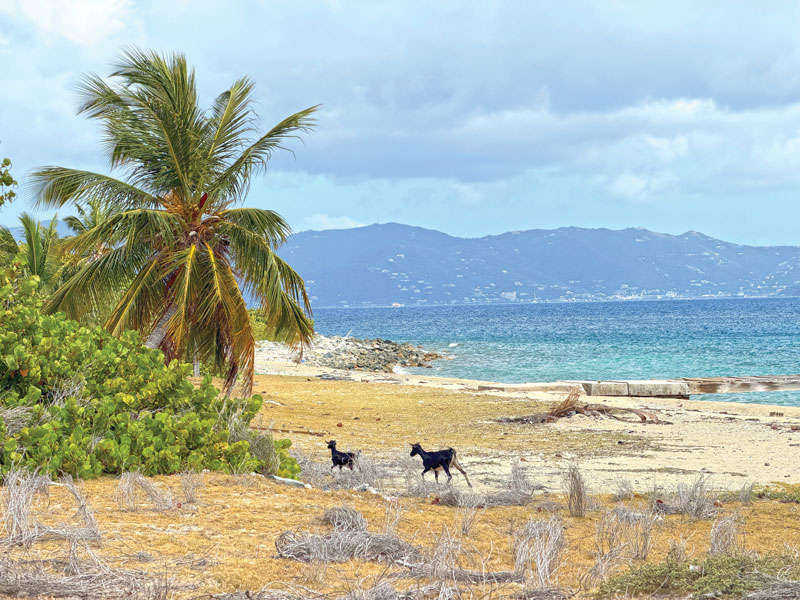
After dinghying to shore we all split up and explored much of the island in short order. My husband and I hiked around the salt ponds in the middle of the island out to Salt Island Bay where remnants of the historic salt-harvesting community can still be seen today. There was an eerie quality to the place, almost as if it had only recently been abandoned. Walking inland there were no sounds except for the calls of shorebirds and wind whispering through the scrubby trees. Walking amongst the abandoned structures, a stray goat would skitter by every now and then.
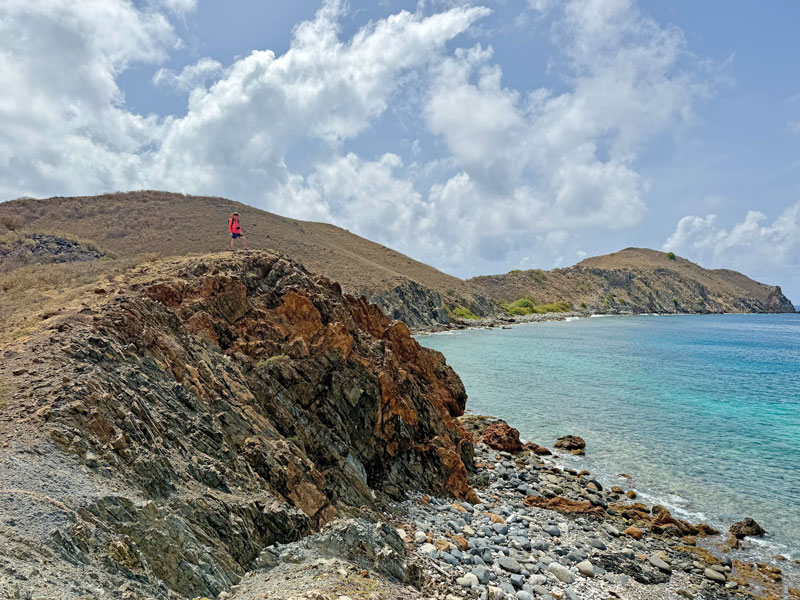
On the opposite side of the island, we took a trail along the rocky beach and up to the ridgeline which afforded a stunning view of the Sir Francis Drake Channel and the anchorages and salt ponds below. But be forewarned: there are cacti, and they will go clean through your shoe if you don’t watch where you step. Imagine the scene from “Home Alone” when Marv steps on the nail…
While hiking around, Salt Island reminded me a great deal of the Channel Islands off California with its rocky beaches and towering cliffs. It felt wild and untamed in the best way.
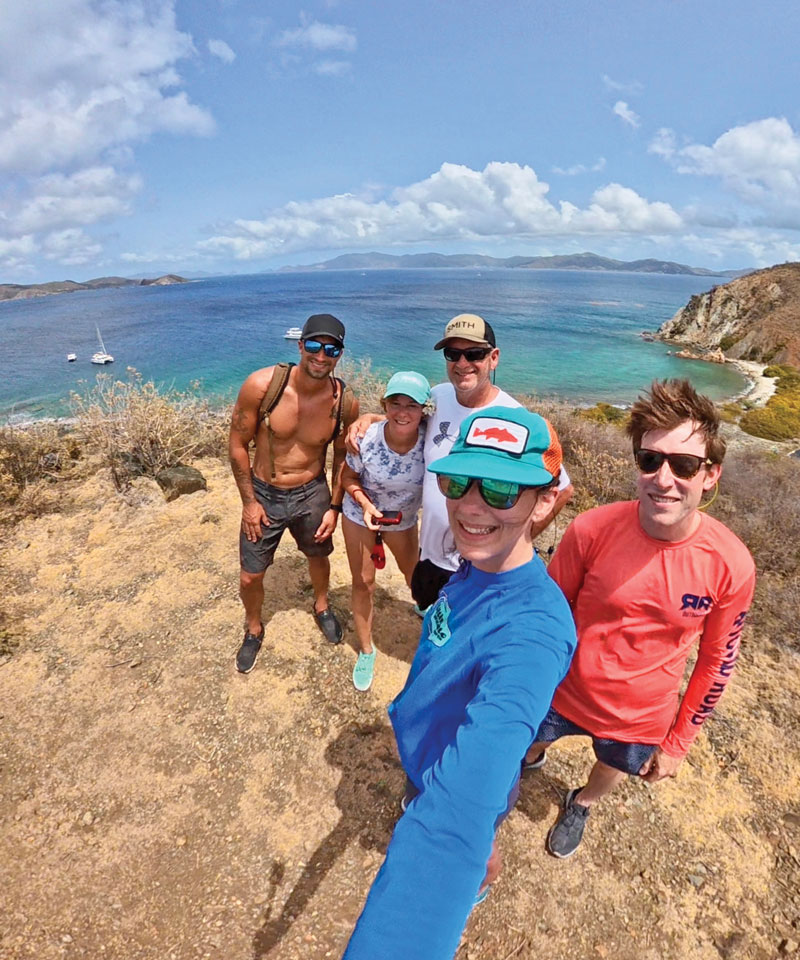
Because national park moorings have a strict time limit, we hightailed it down the ridge (hence the cactus incident) so we had plenty of time to snorkel the RMS Rhone. When considering whether to snorkel this spot on our last visit we ultimately skipped it thinking we wouldn’t be able to see enough to make the visit worth it. Of our group, only my brother is scuba certified. But once again, I will admit how wrong I was.
I have been obsessed with shipwrecks since I was a little kid, and seeing this particular wreck suddenly appear out of the deep blue water was a sight to behold. I didn’t read up on too much of its history until after I returned stateside, but the more I read, the more fascinated I became.
The RMS Rhone was a UK Royal Mail Ship that sank off Black Rock Point on Salt Island during a hurricane on October 29, 1867. She was an iron hulled sail steamer, rigged as a two-masted brig, and measured 310 feet long. She regularly transported mail, passengers, horses, and cargo.
On October 19, 1867 two ships, the RMS Rhone and the RMS Conway, had pulled into Great Harbour on Peter Island. Because it was October, both captains believed hurricane season to be over. But the storm that hit soon after would later be classified as a category three hurricane.
The first half of the storm passed without causing much damage, but both ship’s anchors had dragged. Fearing they would be wrecked on the shores of Peter Island, they decided to make for open water. At the time, the Rhone was considered “unsinkable,” so the passengers from the Conway were transferred to the Rhone and were actually tied into their beds to prevent injuries. Reading that still gives me a chill as we unfortunately know how the story ends.
The Conway left Great Harbour first but was caught by the storm and sank off the coast of Tortola. The Rhone struggled to get out of the harbor because its anchor had become lodged in the reef. It was cut free and lies in Great Harbour to this day. The captain of the Rhone decided to take a route between Dead Chest Island and Salt Island’s Black Rock Point, but just as she was passing the point, the second half of the hurricane hit.
The Rhone was thrown directly into the rocks of Black Rock Point. It is believed that the captain was thrown overboard in that instant and was never seen again. When the ship was thrown into the rocks she split into two, cold water hit the hot boilers, and they exploded. Reports vary but only about 25 of the ship’s approximately 145 passengers survived. The bodies of the remaining sailors were buried in a cemetery on Salt Island and remained there undisturbed for many years until the cemetery was destroyed by Hurricane Irma in 2017.
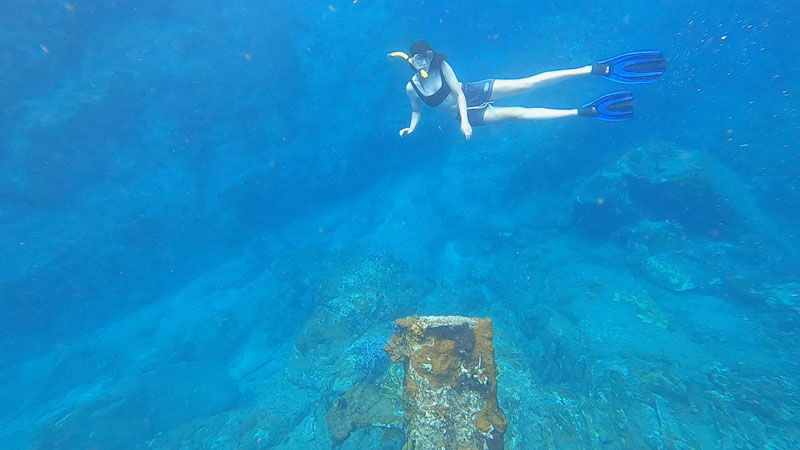
The wreck site was designated a national park in 1980 and is widely regarded for its abundance of marine life and relatively safe nature of the wreckage. Her entire hull is encrusted with coral and popular sites include the ship’s massive propeller; a teaspoon purported to have belonged to the ship’s captain; the “lucky porthole,” which survived the storm intact and is often rubbed by divers for good luck; and a swim through for divers. You may even recognize the wreck as it was featured in the 1977 film “The Deep.”
Today, the stern sits in relatively shallow water, about 30 feet, while the bow sits deeper in about 80-90 feet of water. Take a deep breath and you can easily swim down right on top of the stern section.
For a brief time, we were the only snorkelers in the water while bubbles from the divers below rose all around us. All I wanted to do was get closer but sadly no amount of breath holding could get me where I truly wanted, deep in the bowels of the wreck. But this experience has inspired me to pursue scuba certification before my next trip.
I could have spent all day gazing at that ghostly wreck and trying to get deeper with each dive, but it was time to return to our boat. More of the BVI were calling, and we were only on day three of what had already been a remarkable adventure.
Better Luck at Great Harbour
During that fateful hurricane in 1867, the Rhone was forced to cut its anchor loose while attempting to leave Peter Island’s Great Harbour to escape to the “safety” of open water. We had the opposite problem. With wind ripping over the hillsides and white caps in open water, we were in search of a protected anchorage where we could duck into and find calm waters. Thankfully, Great Harbour delivered, and we found it to be one of the most pleasant spots to spend a night the entire trip.
Prior to grabbing a mooring ball there, we spent the morning snorkeling and beach combing at Deadman’s Bay just around the corner. This was not a place you would want to spend the night, however, depending on conditions. But for a few hours, especially if you would be spending all of your time on shore, it’s a nice little side trip. Most of the main beach is part of the resort (so cabanas and chairs are off-limits to non-guests), but to the left there’s a smaller beach where you can stroll along the shoreline, snorkel around the rocks, or even surf a little break (if you have a paddleboard).
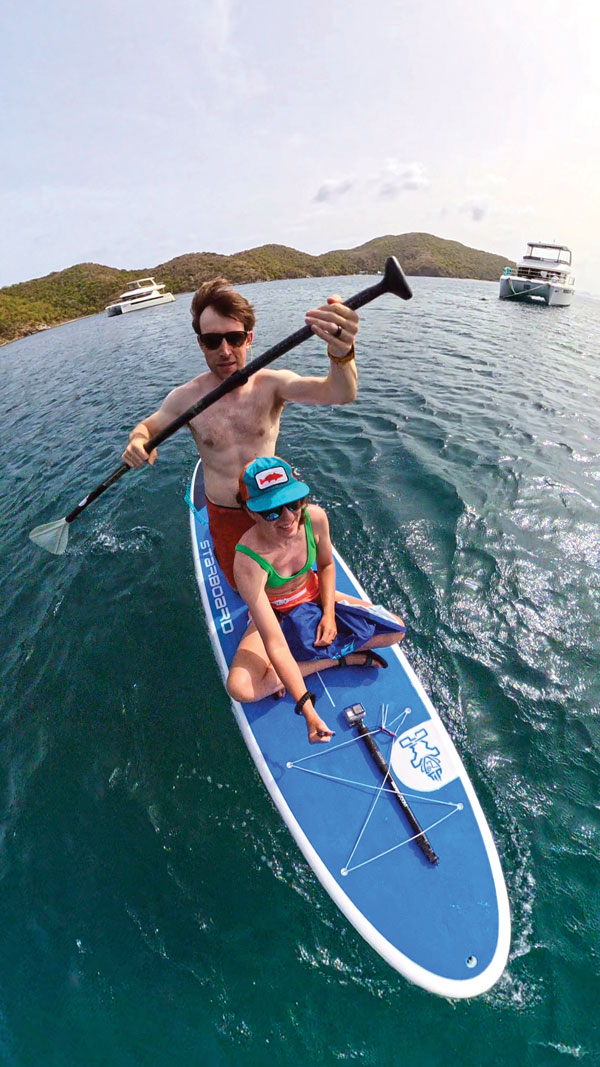
But as far as an overnight anchorage is concerned, this would have been an unpleasant and rolly night thanks to the wind and swells. Luckily Great Harbour was just around the corner, and we had the place practically to ourselves; a vast mooring field and only three other boats.
If heading in and facing the main beach, there’s some nice snorkeling on the left side of the bay. We enjoyed paddling to shore and then snorkeling the ledge that quickly drops down into deeper water, about 20 yards or so off the beach.
We had heard that the Peter Island Resort was well worth the stop, and seeing as how we had missed it on our previous trip, it quickly rose to the top of our to-do list. You can’t see the resort from the anchorage, but if you head straight into the main beach, you’ll see some rustic signs that point to the trail that will lead you there. It was only about a five-minute walk, and after seeing all of the sargassum around the resort’s docks, we knew we had made the right call mooring around the corner and walking over. Next time, however, we would definitely consider getting a slip and/or paying the resort fee to make use of the resort pool (which was gorgeous) and other amenities.
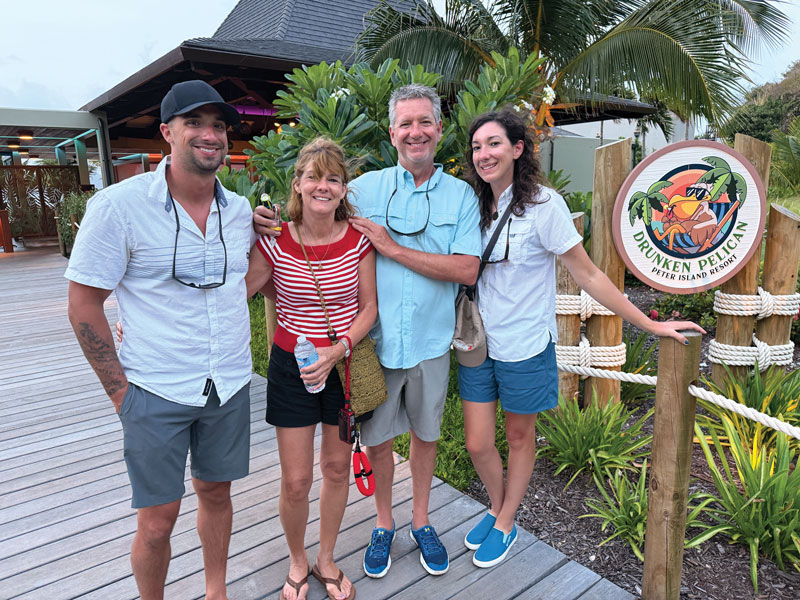
For this short visit, we enjoyed a delicious meal at the Drunken Pelican; I highly recommend it if you ever find yourself near Peter Island! And the views from the restaurant were stunning. After dinner, while walking back to our dinghy at dusk, we passed a few other charterers who seemed a little confused on the trail, so we helped point them in the right direction. It’s not complicated by any means, but you might want to plan your walk to the resort during daylight hours (the first time at least).
Back on the boat, I had perhaps my best sleep of the trip. The anchorage on that particular night was as calm as could be.
The Beauty of a Charter Trip
As I mentioned last month, the BVI are a renowned cruising destination, especially for newbie charterers thanks to easy line-of-sight navigation, the abundance of mooring balls, and of course the beauty of the islands themselves. Our trip was at the end of June, and we never had a problem finding a mooring ball, even at hotspots like Saba Rock (though we did use Boatyball twice during the trip to reserve moorings ahead of time).
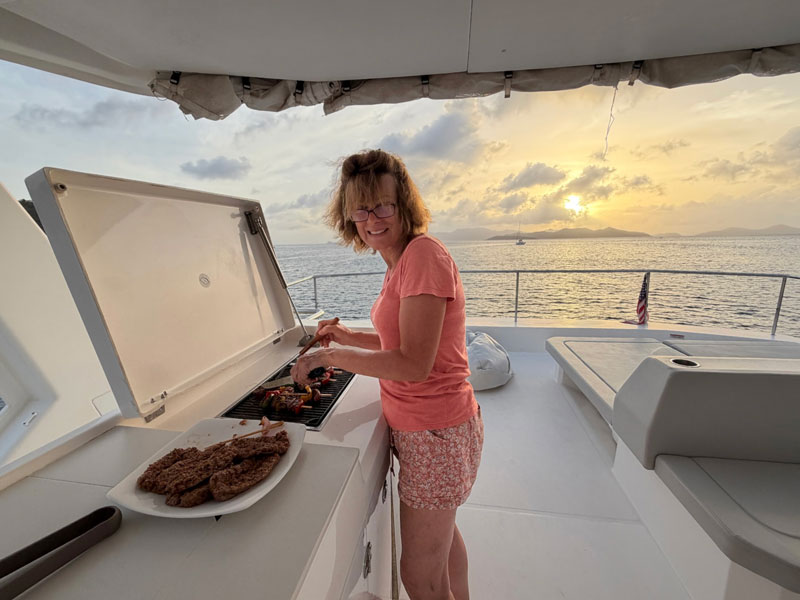
The best way I can try and describe a charter vacation is to picture a road trip but take out all of the things that make it unpleasant—cramped quarters, long stretches of driving, and bad takeout food. Most of our runs from place to place took an hour or less, but you never minded the journey because your “vehicle” is spacious and luxurious. Our Moorings 464 powercat featured four cabins, each with its own private head, a large main salon, seating on the back deck, two large sun loungers on the bow, and a massive flybridge that was half under shade and half open to the sun. If you wanted to take a nap, a shower, or simply lounge in the sun, all of that was possible and extremely comfortable. There was plenty of space for all of us to move around and at times get away from each other (as all families need to do at one point or another), whether we were underway or moored.
Our boat had a dinghy, of course, and we also chose to rent two paddleboards which gave members of our party additional means to get out and explore or simply take a moment for themselves. When it came to food, we never went hungry. How much you pre-provision is up to you, but keep in mind that there are plenty of amazing places to get food shoreside. We always had breakfast onboard, stocked some quick options for lunch, grilled dinner on the flybridge a few nights, and ate the rest of our dinners ashore.
We followed no one’s schedule but our own, stayed as long or as little in each place as we wanted, and experienced more of the BVI than we ever could have by staying in a hotel. It still feels like a whirlwind, and I’m so glad I was able to experience it all with my family.
By Kaylie Jasinski